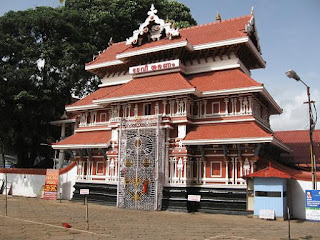
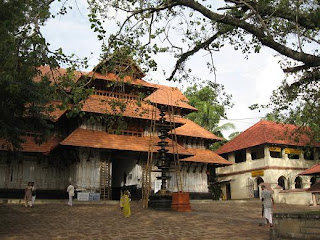
Varadarajar temple, which is located in Chinna Kanchipuram aka Vishnu Kanchi, is one of the most popular temples in
Kanchipuram.
Kamakshi Amman temple is the most important Goddess temple in Kanchipuram;
EKambareswarar temple is the most important Shiva temple in Kanchipuram; Kumarakottam is the most important Muruga (Subramanya) temple in Kanchipuram; Similarly, Varadarajar temple is the most important Vishnu temple in Kanchipuram city. Chinna Kanchipuram (means "Little" Kanchipuram) is more like a separate town as this is located on the other side of main Kanchipuram (Periya Kanchipuram = "Big" Kanchipuram). Varadarajar temple is the centre of attraction of Chinna Kanchipuram.
Varadarajar temple, located in a sprawling 20 acres area, is one of the 108 Divya desams (108 holy abodes of Vishnu). Lord Vishnu, called as Varadarajar in this temple, was believed to be worshipped by Lord Brahma in Krita yuga, Gajendra in Treta yuga, Brahaspati (Guru) in Dwapara yuga and Aadisesha in Kali yuga. Varadarajar in this temple is also called as Devaraja Perumal, Athigiri Arulala Perumal, Karivaradar, and Giri Varadar. It is believed that Indira's white elephant Iravat, is in the form of a hill bears the image of Lord Vishnu in this temple.

This huge temple of Varadaraja was built by Pallava kings in 11th century AD. The temple was patronized by Chola and Vijayanagara kings. There is a big Raja gopuram (temple tower) for this temple in the main entrance. Once you enter the temple, you can find the beautiful 100 pillared hall (Nuttrukkal mandapa) with full of extraordinary sculptures. Behind the mandapa, the tank is located. The original figure of Lord Varadarajar made out of fig wood is kept at the bed of the tank and is taken out only once in every 40 years.
The first roundabout (prakara) of the temple is on the holy mound ''Hasthigiri'. The main shrine is about 40 feet height and you need to take 43 steps to reach. The main shrine has Lord Varadarajar in standing posture with four hands. The main idol of Lord Varadarajar is believed to the second largest idol and the largest idol is Tirupati Balaji idol. There is a separate shrine for the goddess Perundevi. The idol of the goddess is very beautiful. Opposite to Varadarajar, there is a small shrine housing Garuda. Next to Perundevi shrine, there is a shrine for Lord Krishna.

One of the highlights of Varadarajar temple is a small shrine for lizards (lizard worship). Two lizard idols - one with gold plate and another withe silver plate are carved in the ceiling along with the figures of Sun and Moon. Devotees touch these lizard figures; as per the belief, it will relieve them from their diseases and problems. As per the legend, the two sons of sage Srungibera (Hayman and Sukran) were the disciples of the sage Gautama. One day, the lizard was found in the water that they bought of Gautama to perform pooja. Hence, the sage cursed them to become lizards. They got rid of their curse after visiting Varadarajar temple.
The Varadarajar temple is architecturally beautiful and a lot of sculptures and paintings are found. There is a shrine for Valampuri Vinayakar in the prakara. There is a shrine for Dharmendran, and Andal too. There are also shrines for Yoga Narasimha, Rama, Ranganath, Danvantri and Karumanikka Perumal. Near the tank there is a shrine for Chakrathalwar and Narasimha on the back side.
Sages like Peyalwar, Budhatalwar, and Tirumangai Alwar have sung on this deity. The greate Hindu reformed saint Ramanujar was believed to have lived in this temple for sometime. This is the birth place of Vedanta Desikar. Garuda Seva, which is a grand utsav (festival) done in Vaikasi month is said to be the most and special festival here.

There is another legend related to this temple. Lord Brahma wanted to get darshan of Lord Vishnu in Chathur Bhujam (with four hands) and becasue of this, he did penance towards him. First Vishnu gave his seva in the form of Teerth, which is now called as "Pushkar". Next he gave the seva in the form of forest, which in now called as "Naimisaranyam". But still, Lord Brahma was not satisfied. At that time, he heard an Asarari (an unknown voice from heaven) which said that to get the darshan Sri Varadarajar, he must do the great Ashwameta yagna for hundred times. But, Lord Brahma felt so depressed that he didn't have patience to perform 100 Ashwameta yagna. Finally as per Vishnu's advice, he performed one Ashwameta yagna which is equivalent to 100 Ashwameta yagnas. It is said that doing one Ashwameta yagna in Kanchipuram is equivalent to 100 times of doing Ashwameta yagna somewhere else. Brahma started the yagna and from the fire of the yagna, Sri Varadarajar came out and gave his darshan.

"Ka" - means Brahma and "Anjitham" - means who was worshipped. Since, Brahma worshipped Vishnu as Varadharajar, this place is called "Kanchi".
Varadarajar temple is one place which should not be missed when you go to Kanchipuram.
Happy travelling.
Site Name: Varadaraja Perumal Temple
Highlights:1) One of the most important temples in Kanchipuram
2) The most important temple in Little Kanchipuram (Chinna Kanchipuram)
3) The most important Vishnu temple in Kanchipuram
4) One of the 108 Divya Desams temples
5) Lizard worship
6) The second biggest Vishnu idol
7) 1000 years old Pallava temple
8) Beautiful sculptures, paintings, and architecture
Location: Chinna Kanchipuram, 75 kms from
Chennai, Tamil Nadu state, India
Nearest Railway Station: Kanchipuram
Nearest Airport: Chennai (around 75 kms)
How to reach: Easily reachable by road and train
Hotel: A lot of luxury hotels and budget hotels are available
Restaurants: There are a lot of good restaurants in the city
View Larger Map